

Indian jewellery isn’t just ornament. It’s craft, history, and identity you can wear. From red carpets to museum archives, these pieces and traditions have traveled far beyond India’s borders and become global icons.
1.Kundan & Polki: The Original Red Carpet Royalty
What it is: Kundan uses 24k gold foil to set flat-cut diamonds, glass, or gemstones. Polki is the same technique but specifically with uncut natural diamonds.
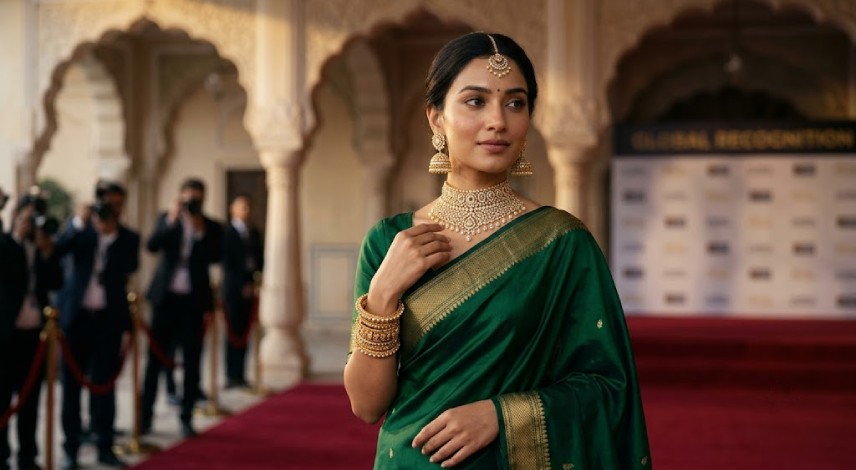
Why the world knows it: Think Maharaja collections, but also modern Met Gala moments. Designers like Sabyasachi and brands like Amrapali have put elaborate polki chokers and haathphools on A-listers from Beyoncé to Deepika Padukone at Cannes. The raw, uncut sparkle photographs unlike any other diamond cut.
Seen on: International brides, Vogue covers, Rihanna’s Super Bowl after-party look.
2. Temple Jewellery: Divine to Daily Wear
What it is: Originally crafted for deities in South Indian temples. Motifs of Lakshmi, peacocks, and nagas in 22k gold, often with red/green stones.
Why the world knows it: Museum collections at the Met and V&A hold 18th-century temple pieces. Today’s lighter, wearable versions are everywhere from Michelin-starred Indian restaurants in London to Diwali parties in NYC. The motifs are now global design shorthand for “heritage.”
Seen on: Classical dancers worldwide, Indra Nooyi at global summits, recreated by Cartier in the 1920s as “Hindu jewellery.”
3. Meenakari: India’s Painted Gold
What it is: Enameling technique where gold surfaces are painted with vibrant colors, then fired. Jaipur and Varanasi are famous centers.
Why the world knows it: European luxury houses noticed it in the 1600s. Today, you’ll see meenakari on global runways — from Dior’s Indian-inspired collections to Etsy artisans in Brooklyn. The reversible nature makes it a travel favorite: enamel on one side, gemstones on the other.
Seen on: Priyanka Chopra’s wedding jewels, museum exhibits on Mughal art, indie designers in Tokyo.
4. Jadau: The Heirloom Technique
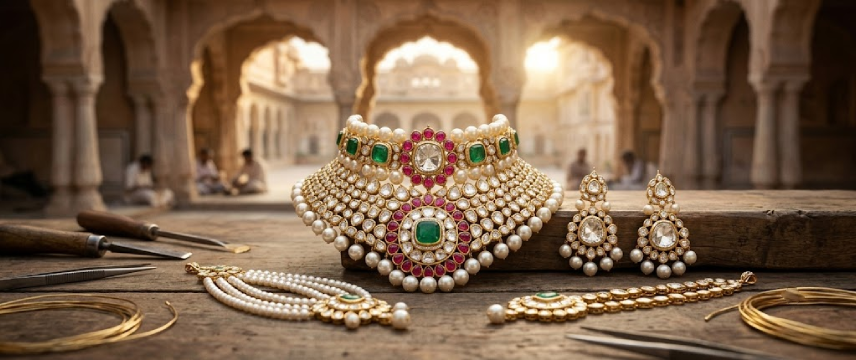
What it is: A 500-year-old Mughal method where gems are embedded into gold without prongs. The gold is heated and shaped around the stone. Bikaner and Rajasthan are hubs.
Why the world knows it: True jadau pieces are considered museum-grade. When international collectors talk “Indian royal jewellery,” they mean jadau. Modern brides from Dubai to Toronto commission jadau sets as family investments.
Seen on: Sotheby’s auctions, Isha Ambani’s wedding jewels, recreated in period films like Jodhaa Akbar.
5. Navratna: The Nine-Gem Power Set
What it is: A prescribed setting of nine gemstones — diamond, ruby, emerald, sapphire, pearl, coral, hessonite, cat’s eye, yellow sapphire — each tied to a planet in Vedic astrology.
Why the world knows it: Wellness meets jewellery. Global interest in astrology and ayurveda brought navratna back. It’s now seen as a talisman rather than just ornament. You’ll spot navratna rings on Silicon Valley CEOs and yoga teachers in Bali.
Seen on: Elizabeth Taylor’s collection, modern wellness influencers, Queen Elizabeth II’s gifts from Indian royals.
6. The Nose Ring: From Tradition to Street Style
What it is: Nath, mookuthi, or phul — nose rings, studs, and hoops with chains.
Why the world knows it: ’90s pop culture made the Indian nose ring a symbol of cool rebellion. Madonna, Gwen Stefani, and Zendaya all wore versions. Today it’s both high fashion on Paris runways and everyday street style in London and LA.
Seen on: Coachella, Dior campaigns, Gen Z taking it mainstream without the piercing.
7. Chandelier Jhumkas: The Shape the World Copied
What it is: Bell-shaped earrings, often with layered chains and pearls, evolved from temple jewellery.
Why the world knows it: That dome silhouette is now a global earring archetype. Zara, H&M, and Anthropologie all sell “Indian-style chandelier earrings.” The real thing in gold and gemstones still shows up at state dinners and Oscars after-parties.
Seen on: Mindy Kaling, Freida Pinto, and frankly, every destination Indian wedding from Tulum to Tuscany.
Where NVP Jewellery Fits In
These crafts aren’t just history — they’re living traditions. At NVP Jewellery, we work with the same karigars and techniques that built these global icons. From polki and jadau to sculptural pieces inspired by temple motifs and meenakari, our collections reinterpret India’s most famous jewellery styles for today’s woman. Handcrafted in gold and natural diamonds, designed to move between Mumbai and Milan. Because heritage shouldn’t sit in a vault. It should live on you.
Why Indian Jewellery Travels So Well
- Story + Sparkle: Every piece has a meaning — protection, prosperity, lineage — which resonates in a world craving objects with soul.
- Maximal Craft: Hand techniques like kundan and meenakari can’t be mass-produced. That rarity reads as luxury anywhere.
- Adaptability: A polki choker becomes a red-carpet necklace. Temple motifs become minimalist studs. The core design language scales up or down.
Want to wear it? Start with one hero piece. A pair of polki studs or a meenakari ring works with jeans in Mumbai or Milan. Let the craft do the talking.


